Strategic Visual Positioning: Maximizing Impact with a Real Estate Home Sale Social Media Post
In the modern property market, visibility is not merely about presence; it is about precision. A Real Estate Home Sale Social Media Post serves as the digital handshake between a property and its potential buyer. It is the first point of contact, the initial filter, and often the deciding factor in whether a user stops scrolling to engage or continues past without a second thought. For real estate professionals, marketers, and property owners, understanding the strategic utility of these visual assets is critical to achieving consistent sales outcomes.
The difference between a generic listing and a high-converting campaign often lies in the quality and intentionality of the creative materials used. Utilizing a professionally designed template allows for the standardization of brand messaging while maintaining the flexibility needed to highlight unique property features. This approach transforms a simple image into a strategic tool for communication, branding, and lead generation.
The Strategic Value of High-Quality Visual Templates
When we discuss a Real Estate Home Sale Social Media Post, we are referring to more than just a photograph of a house. We are discussing a structured visual argument that persuades the viewer of the property’s value. Pre-designed templates, such as those offering fully editable elements, high-resolution outputs, and specific color variations, provide a foundational framework for this argument.
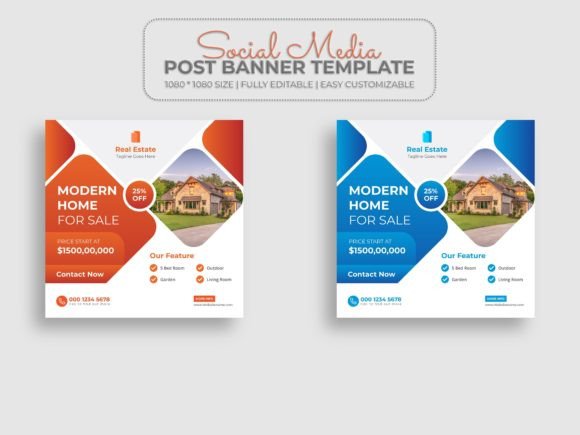
Consider the operational efficiency gained by using a standardized yet customizable format. Instead of starting from scratch for every listing, agents can leverage a 1080 x 1080 pixels square web banner template optimized for Instagram and other social platforms. This ensures that every post meets the technical requirements for clarity and impact, specifically at 300 DPI and in RGB Color mode. These technical specifications are not arbitrary; they ensure that images remain crisp on high-density mobile screens, where the majority of property searches begin.
Furthermore, the availability of files in Illustrator EPS CC and JPG formats offers versatility. Professionals who require deep customization can edit vector elements in Illustrator, while those needing quick deployment can utilize the JPG files. This duality supports both long-term branding strategies and immediate tactical needs, allowing teams to scale their content production without sacrificing quality.
Enhancing Brand Consistency and Market Positioning
Consistency builds trust. In real estate, trust is the currency of transaction. A haphazard approach to social media visuals—where fonts, colors, and layouts change unpredictably—can dilute brand recognition. By adopting a template with 2 Color Variation options, agencies can maintain a cohesive visual identity across different types of listings or market segments.
For instance, a luxury portfolio might utilize a darker, more subdued color variation to convey exclusivity, while a family-home-focused campaign might use brighter tones to evoke warmth and accessibility. The ability to easily edit and customize main elements means that the core brand remains intact, but the messaging adapts to the specific audience. This strategic alignment between visual design and target demographic is essential for effective positioning.
Moreover, the use of free fonts in these templates removes logistical barriers. There is no need for expensive licensing agreements or complex font management systems. This accessibility ensures that freelancers, small business owners, and independent agents can produce professional-grade content without prohibitive overhead costs. It democratizes high-quality marketing, allowing smaller entities to compete visually with larger firms.
Operational Efficiency and Productivity Gains
Time is a finite resource for any real estate professional. The process of designing a social media post from concept to completion can be time-consuming. By utilizing a pre-structured Real Estate Home Sale Social Media Post template, practitioners can significantly reduce the time spent on graphic design tasks. This shift allows agents to focus on high-value activities such as client consultations, property viewings, and negotiation strategies.
The workflow becomes streamlined: select the appropriate color variation, insert the high-resolution property image, update the text details, and export. Because the layout is already optimized for engagement—balancing white space, typography, and imagery—the cognitive load required to create each post is minimized. This efficiency is crucial during peak listing seasons when volume is high and speed to market is a competitive advantage.
Additionally, having a library of editable templates fosters creativity within constraints. Rather than facing the paralysis of a blank canvas, designers and agents can experiment with different headlines, calls to action, and image crops within a proven framework. This encourages iterative improvement, where teams can test which visual arrangements yield higher engagement rates and refine their approach based on data rather than guesswork.
Risks of Unintentional Design and Lack of Context
While templates offer significant advantages, they are not a substitute for strategic thinking. A common pitfall is the reliance on aesthetic appeal without clear communicative goals. Posting a beautifully designed image that fails to convey key information—such as price range, location highlights, or unique selling propositions—results in missed opportunities. The design must serve the message, not obscure it.
Another risk is the misuse of stock imagery or inappropriate photos. It is important to note that in many template packages, the photos are not included. This requires the user to source high-quality, authentic images of the actual property. Using generic or misleading visuals can damage credibility and lead to customer dissatisfaction. Authenticity resonates with modern buyers who are savvy and skeptical of overly polished, unrealistic representations.
Furthermore, failing to customize the text elements can lead to generic messaging that blends into the noise of social media feeds. If every post looks identical and reads similarly, audiences may develop banner blindness. Strategic use involves tailoring the headline and body copy to address specific pain points or desires of the target buyer segment. The template provides the structure, but the content must be relevant and compelling.
Decision-Making Guidance for Effective Implementation
To maximize the return on investment from these visual assets, decision-makers should approach their usage with intentionality. Here are practical considerations for integrating a Real Estate Home Sale Social Media Post into your marketing plan:
- Define the Objective: Before designing, determine the goal. Is the post intended to generate leads, announce an open house, or showcase a recent sale? The objective will dictate the call to action and the emphasis of the visual elements.
- Audience Alignment: Consider who is viewing the post. First-time homebuyers may respond to different visual cues and messaging than investors or luxury buyers. Use the 2 Color Variation options to match the tone to the audience.
- Quality Control: Ensure that the property images used are high-resolution and well-lit. Since the template is designed for 300 DPI output, low-quality images will appear pixelated and unprofessional, undermining the design’s effectiveness.
- Platform Optimization: While the 1080 x 1080 Pixels format is ideal for Instagram, consider how it translates to other platforms. Square formats perform well on Facebook and LinkedIn, but may need cropping for stories or reels. Plan your content distribution accordingly.
- Iterative Testing: Do not assume one design works for all properties. Test different headlines, image angles, and color schemes. Analyze engagement metrics to understand what resonates with your specific audience and refine your approach over time.
Long-Term Results Through Intentional Design
The ultimate goal of using a Real Estate Home Sale Social Media Post is not just to sell a single property, but to build a sustainable brand presence that drives long-term results. Consistent, high-quality visual communication establishes professionalism and reliability. Over time, this consistency creates brand equity, making it easier to attract new clients and retain existing ones.
By treating these templates as strategic tools rather than mere decorative elements, real estate professionals can enhance their operational efficiency, improve their market positioning, and achieve better sales outcomes. The integration of thoughtful design with clear strategic intent transforms social media from a chaotic broadcast channel into a targeted, effective communication platform.
In conclusion, the value of a Real Estate Home Sale Social Media Post lies in its ability to bridge the gap between property and buyer through clear, compelling, and consistent visual storytelling. When used intentionally, with attention to detail and strategic goals, these templates become indispensable assets in the modern real estate marketer’s toolkit. They enable professionals to navigate the complexities of digital marketing with confidence, ensuring that every post contributes to the broader objectives of growth, engagement, and success.